
What Is a Destination Wedding?
What happens when travel meets a wedding celebration? You get a destination wedding. A destination wedding is a wedding that takes place somewhere other than the couple’s hometown, often in a location that requires travel for most guests. This could be another state, another country, or a scenic location like a Mexican resort that feels more like a vacation than a traditional event venue.
Unlike local traditional weddings, where guests attend for just a few hours, eat food, dance, and then leave, destination weddings often become multi-day experiences. Guests usually stay in a nearby hotel or resort, participate in multiple events, and spend time exploring the area before or after the ceremony. Destination weddings are popular in beach towns, historic cities, mountain retreats, and private villas, where the setting itself becomes part of the celebration.
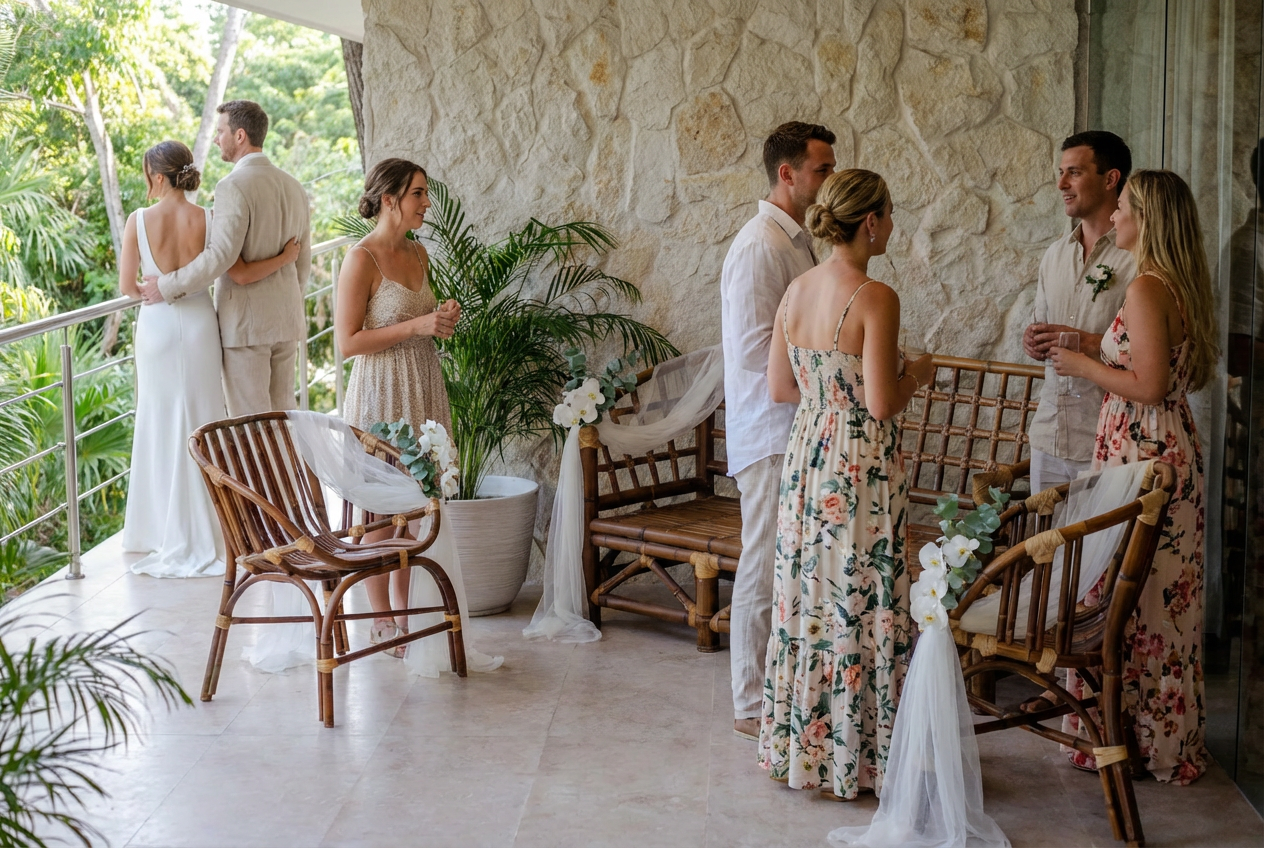
What Makes a Wedding a “Destination” Wedding?
People might ask you what makes a wedding a “destination” wedding. A wedding is typically considered a destination wedding when:
Number 1: Most guests must travel and stay overnight
Number 2: The location is chosen for the experience, scenery, or atmosphere
Number 3: Events extend beyond the ceremony and reception
Number 4: Accommodations are arranged close to the venue
Now it doesn’t have to be international. A wedding in another state or a remote area can still qualify as a destination wedding if travel is involved.
Why Destination Weddings Work Especially Well for Smaller Guest Counts
Destination weddings naturally align with smaller weddings, including 50-person weddings. Because travel is required, it makes it a little more expensive because of flight, but that means that your guest lists tend to be more intentional, and then you won’t get that random person who just shows up for the food and then leaves. Couples often invite close family and friends who are genuinely excited to attend, which creates something more connected and a more relaxed atmosphere. When fewer guests, couples can also choose venues that prioritize experience over capacity, such as boutique resorts, private estates, beachfront locations, or secluded properties that would not work for large crowds.
Common Types of Destination Weddings
Destination weddings come in many styles, depending on the location and couple’s preferences. Some people like the secluded mountain wedding, or a beach coastal wedding. Now these are the most common types of destination weddings.
Beach and coastal weddings
Our first one is beach weddings. Popular for their natural beauty, warm weather, and open-air settings.
Resort weddings
Offer built-in accommodations, event coordination, and easy logistics for guests.
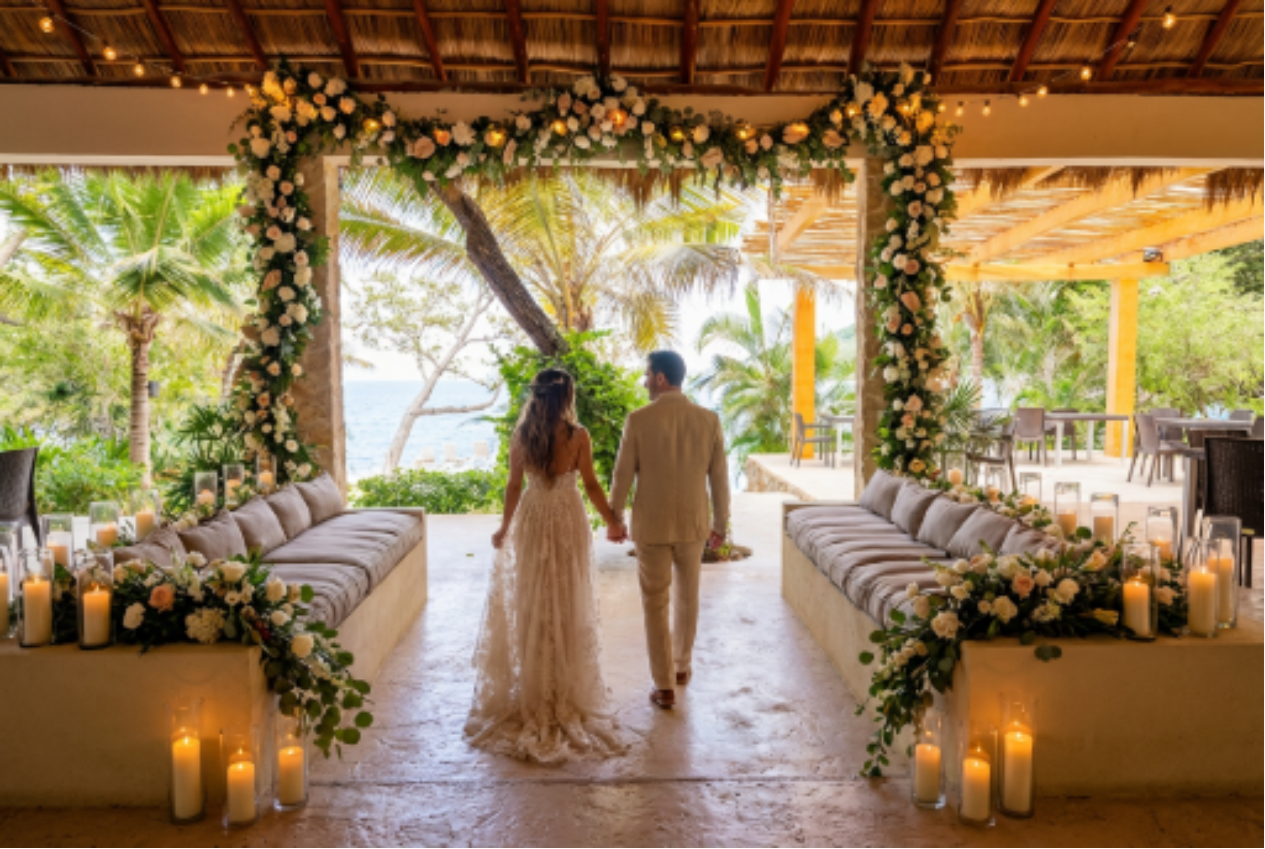
Villa or private estate weddings
Ideal for intimate groups who want privacy and flexibility.
Mountain or nature retreats
Appeal to couples who want scenic views and a peaceful environment.
City destination weddings
Often chosen for cultural experiences, food scenes, or iconic landmarks.
How Destination Weddings Typically Work
Most destination weddings follow a similar rhythm, even though the location and details may vary.
Guests arrive one to two days early
This gives everyone time to settle in, travel comfortably, and adjust before the wedding day.A welcome event sets the tone
This might be a casual dinner, drinks by the beach, or a relaxed meet-and-greet that brings everyone together.The ceremony and reception happen on one main day
This is the centerpiece of the celebration, without the pressure of rushing guests in and out.
Optional activities like group excursions, pool days, or guided tours
A farewell brunch or relaxed send-off the following morning
This format gives couples and guests more time to connect, rather than packing everything into a single afternoon.
Is a Destination Wedding More Expensive?
Not always. While travel costs are part of the equation, destination weddings can sometimes cost less overall, especially when the guest list is smaller.
Couples often save in areas like:
Venue size requirements
Décor, since the scenery already provides a strong visual backdrop
Guest-count-based expenses such as catering and rentals
Instead of putting the entire budget into one large event, many couples choose to invest in better food, shared experiences, and a more relaxed atmosphere.
When All Said and Done
A destination wedding offers a different way to celebrate, one that prioritizes connection, experience, and time together over sheer size. With a smaller guest list, couples can be more intentional about every choice, from the location to the flow of the weekend. Planning a destination wedding starts with choosing a place that feels meaningful, selecting a venue that can support both events and accommodations, and building a simple itinerary that gives guests time to relax and enjoy the setting. When those elements come together, a 50 person wedding becomes less about logistics and more about shared moments. For couples who value memorable locations, unhurried celebrations, and quality time with their guests, a destination wedding can be a thoughtful and rewarding way to begin married life.